Heavy Horses and Wildflower Seed: A Meadow Harvest With a Difference
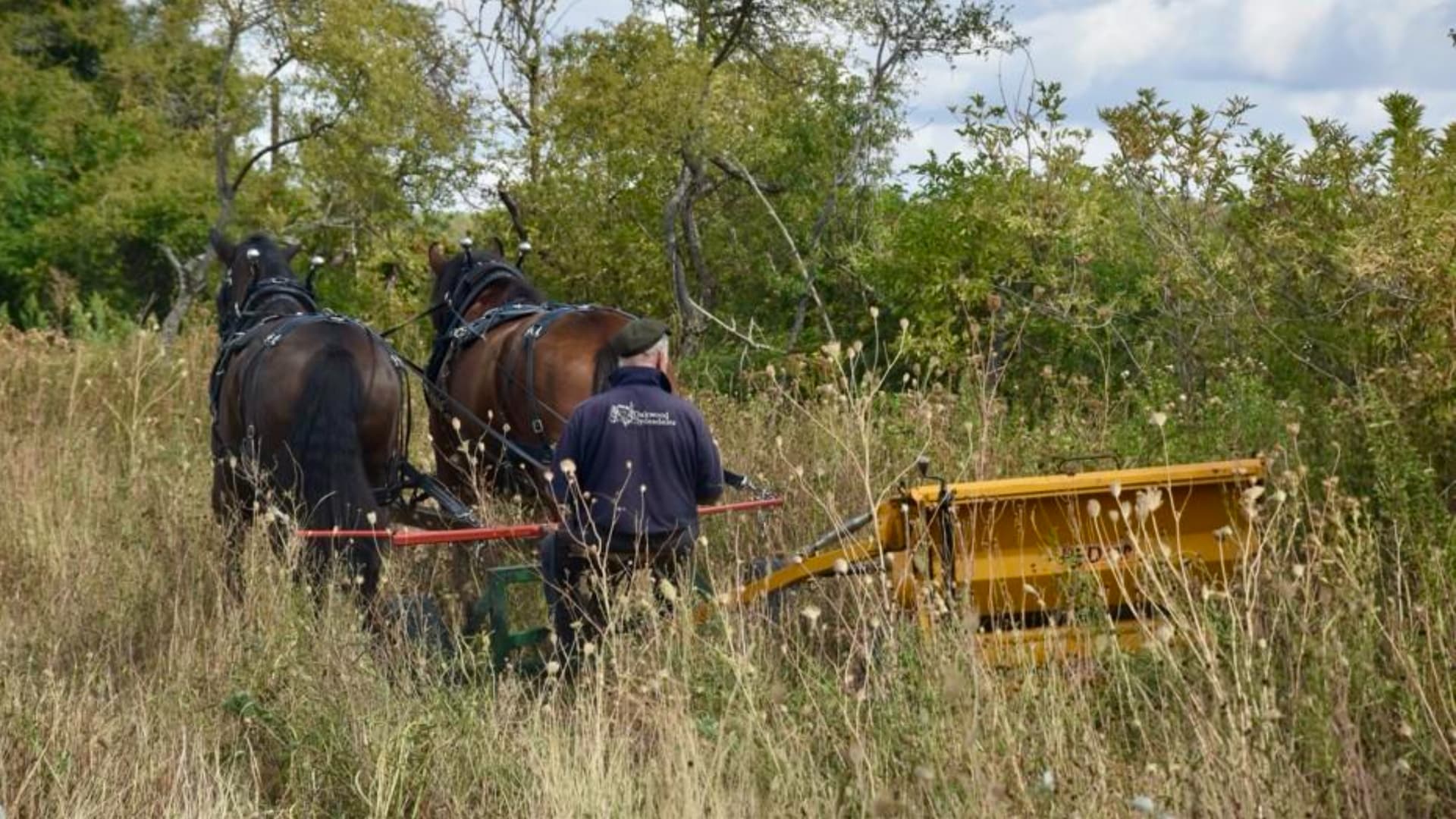
Picture a pair of heavy horses working steadily through a summer meadow, a wooden-wheeled harvester rolling behind them, and a crowd of families watching from the edge. It looks like a scene from a century ago, but it’s one of the most forward-thinking ways to look after Britain’s wildflower meadows.
If you visited the New Forest Show in 2026, you may have stopped by the Natural Shoots stand and heard about it first-hand. Founder Edward Donald uses working heavy horses to harvest native wildflower seed.
Why wildflower meadows matter
Wildflower meadows are among the richest habitats in the countryside. They feed bees, butterflies and moths, shelter spiders, grasshoppers and beetles, and support the birds and mammals further up the food chain.
Restoring meadows depends on good-quality native seed, ideally collected locally so it suits the soil and climate. How that seed is collected matters too. Heavy diesel machinery can compact the soil and sweep up the insects living among the flowers. That’s where a nature-based approach comes in.
How a heavy horse seed harvest works
Natural Shoots pairs one of the oldest skills in farming with a piece of modern kit: a one-of-a-kind brush harvester pulled by a pair of heavy horses. There’s no engine. The brushes are driven by the turn of the wheels as the horses walk forward.
As the harvester passes through the meadow, it gently brushes ripe seed heads into a collecting hopper. The benefits are simple:
Lower emissions and cleaner air, with no diesel engine involved
Less soil compaction, because horses and a light harvester tread far more gently than tractors
Kinder to wildlife: pollinators and invertebrates can fly or walk away free, rather than being swept up and lost
A better meadow afterwards: unripe seed is left behind to ripen and drop, and stems that haven’t flowered yet spring back to bloom later in the season once the autumn rains arrive
Traceable seed: every batch can be linked back to the exact meadow it came from
The finished seed is sold by Natural Shoots in upcycled shotgun cartridge cases, giving paper and plastic cases a second life instead of sending them to landfill or incineration.
From one meadow to three
The project began at Winter Hill Golf Club, where Natural Shoots planted a new 1,500 square metre meadow in spring 2025. After the greenkeeping team prepared the ground, 55 volunteers sowed the seed. They came from Berkshire Springboard, local residents, Cookham Explorers Cubs and Scouts, and staff from Avanade on company volunteer hours.
That first autumn, the horses harvested seed from 20 species, including common poppy, cornflower, corn marigold, sainfoin, self-heal, wild carrot and yarrow. Bees, spiders, knot moth caterpillars and ants turned up in the hopper too, and walked away unharmed.
In 2026 the harvest grew to 2,700 square metres across three sites: the golf course meadow in its second year, plus meadows managed by the National Trust at Cliveden and local nature charity WildCookham. Highlights from the day included:
More species: the golf course meadow gained around ten new species, including meadow cranesbill, bird’s-foot trefoil, common knapweed, corn cockle and yellow loosestrife
Promising first harvests: the National Trust and WildCookham meadows yielded nine species, including yellow rattle, common knapweed and salad burnet
Thriving insect life: grasshoppers, coneheads, orb spiders, earwigs and many moths and flies were spotted in the hopper at all three sites
A real crowd: more than 100 people came to watch, some travelling from well outside the area. Children got up close to the horses and peered into the hopper, and The White Oak pub hosted two ‘meet the horses’ sessions between harvests
The work was carried out by Oakwood Clydesdales, with support from National Trust Cliveden, WildCookham, Get Golfing at Winter Hill Golf Course and The White Oak.
“Nature-based solutions offer the dual benefit of increased traceability of the seed harvest whilst ensuring adjacent ecosystems are maintained and enhanced. Last year’s seed harvest at Winter Hill Golf Course produced 20 meadow flower species. In the spring this year I identified 8–10 new flowering species in the same area.”
Edward Donald, Founder and Managing Director, Natural Shoots
Heavy horses, heritage and the New Forest Show
Stories like this are at the heart of what the New Forest & Hampshire County Show celebrates: rural skills, working animals and the people finding new ways to care for the place we call home.
The New Forest & Hampshire County Show returns to New Park, Brockenhurst on 27, 28 and 29 July 2027 (save the date). Join our mailing list to be first to hear when tickets go on sale.
The New Forest & Hampshire County Show helps raise funds to support the New Forest Agricultural Show Society and other local and national charitable organisations. The New Forest Agricultural Show Society is a private company limited by guarantee.

 Buy Tickets